
Clogged Gutters and Roof Damage: What to Fix Before Winter
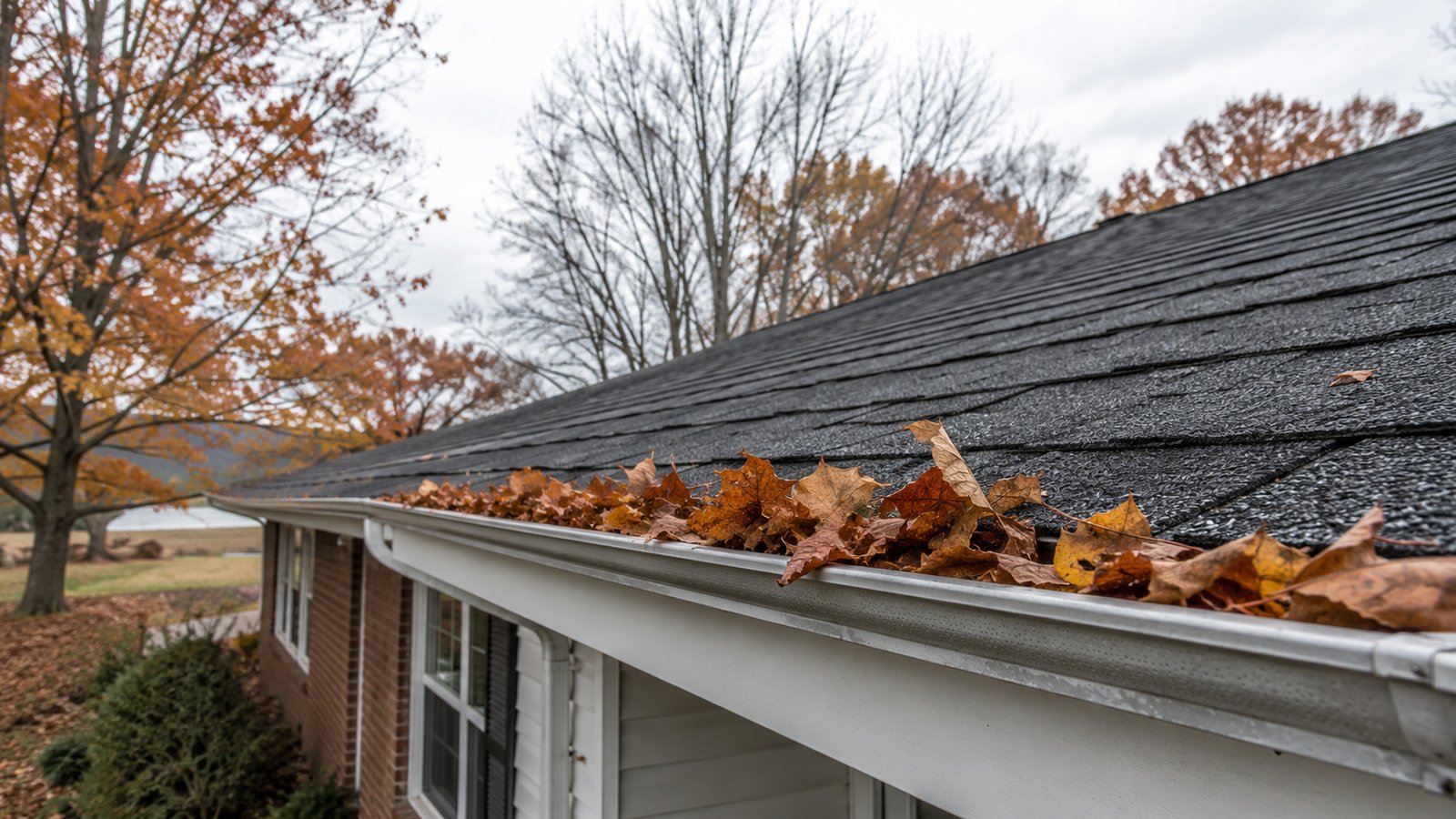
Clogged gutters back rainwater up under the edge of your roof, and once the temperature drops, that trapped water freezes and can force melt-water under your shingles as an ice dam. Before winter reaches western Kentucky and northwest Tennessee, clear the gutters, confirm the downspouts drain well away from the house, and fix any sagging sections or soft fascia while it's still easy to get to.
How do clogged gutters actually damage a roof?
Clogged gutters stop water from leaving the roof the way it's supposed to, so it backs up and soaks into the wood behind the gutter instead. Leaves, shingle grit, and seed pods pack into the trough until water has nowhere to go but over the back edge, where it runs down the fascia board — the trim behind the gutter — and the soffit underneath the eave. Left wet through a fall and winter, that wood starts to rot, and rotted fascia can't hold a gutter's weight, which is how you end up with a gutter pulling away from the house.
It doesn't stop at the trim. Standing water at the roof edge also works its way under the first course of shingles, especially once it freezes and expands. That's the setup for the ice dams covered below, and it's also just a slow, quiet way to rot the decking under your shingles without anyone noticing until there's a stain on a ceiling.
What is an ice dam, and why does it matter here?
An ice dam is a ridge of ice that forms at the edge of your roof and blocks melting snow from draining, so the trapped water backs up under your shingles. According to the Insurance Institute for Business & Home Safety (IBHS), ice dams form when heat from inside the house rises into the attic, warms the roof deck, and melts the underside of the snow layer. That meltwater runs down until it hits the colder eave, where it refreezes into a dam. Water keeps arriving from above, has nowhere to drain, and gets pushed backward under the shingles into the attic or down an interior wall.
Western Kentucky and northwest Tennessee don't get the deep, prolonged cold of the upper Midwest, but we get exactly the freeze-thaw swings that build ice dams — a snow or sleet event followed by a hard overnight freeze. A gutter already clogged with fall leaves makes that ice form right where you least want it: sitting against the fascia and the lowest run of shingles.
IBHS points to two long-term fixes: good attic insulation and ventilation, so the roof deck stays cold and even instead of warm in spots, and keeping ceiling penetrations sealed so household heat doesn't leak into the attic. Clear gutters won't stop an ice dam from forming on their own, but a gutter packed with debris guarantees that any water that does dam up has nowhere to run off once it thaws.
What should you fix on your gutters before winter?
Four things cover most of what causes gutter-related roof damage. Work through them while the weather's still cooperating:
- Clear and flush every run. Scoop out leaves and grit by hand or with a blower, then run a hose from the high end to confirm water reaches the downspout without backing up anywhere.
- Check downspouts drain away from the house. Water dumped right at the foundation soaks the ground next to your footer and can pool and refreeze there. Extend downspouts so they carry water clear of the foundation instead of just off the roof.
- Look for sagging or pulling-away sections. Gutters should hold a slight, even pitch toward the downspout. A section that's sagging or has visibly pulled its hangers loose is usually a sign the fascia behind it has already taken on water.
- Inspect the fascia and the first course of shingles. Soft, discolored, or peeling fascia behind the gutter means water's already gotten in. Lifted or missing shingles right at the eave are the exact spot an ice dam does its damage, so that's worth a close look before the cold sets in.
If you find soft fascia or damaged shingles at the eave, that's a repair job, not a cleaning job — worth a call before winter locks it in. Our shingle roofing and repair crew can button up eave damage while it's still a small fix.
Is it worth installing gutter guards?
For a lot of homes here, especially anything shaded by trees, gutter guards pay for themselves in fewer cleanings and less risk of a clog turning into fascia rot. They're not maintenance-free — you'll still want an occasional check — but they cut down how often debris packs in tight enough to back water up. Here's roughly how the numbers stack up:
| Option | Typical cost | How often you'll need it |
|---|---|---|
| Professional gutter cleaning | About $191–$529 per visit (avg. ~$360) | At least twice a year |
| Gutter guard installation | About $23 per linear foot (~$4,300–$5,200 for a typical 200-ft house) | One-time, plus an occasional check |
| Ice dam / interior leak repair | Varies widely — often far more than either of the above | Needs a roofer, not a DIY fix |
Cleaning figures are 2026 national data from This Old House; gutter guard figures are 2025 pricing data from the same source. Both are directional national ranges — get a local quote for your house.
The math is simple: guards cost more up front but usually cost less than several years of professional cleanings, and they lower the odds of the expensive failure at the bottom of that table. If your gutters clog every fall no matter what you do, guards are worth pricing out.
Does homeowners insurance cover gutter or ice dam damage?
Sometimes, but not automatically. Dwelling coverage on a standard homeowners policy can pay to repair ice dam damage to your roof, walls, or interior, according to Progressive, as long as the damage counts as sudden and accidental. Where it usually falls apart is when an adjuster decides the damage built up gradually from neglect — gutters that sat clogged all season, for example — because most policies exclude damage from lack of maintenance. Most policies also won't pay to actually remove an ice dam, only to repair what it damaged.
That's the practical reason to handle gutter maintenance every fall rather than waiting for a problem: it's the difference between a covered claim and a denied one if an ice dam does form. If you do end up with storm or ice damage this winter, our roof restoration team can help document it and get it repaired.
None of this is complicated work, but it's easy to put off until the first cold snap makes it miserable. Get the gutters clear, the downspouts pointed away from the house, and any soft fascia fixed before the first freeze, and you take ice dams almost entirely off the table for the winter.
Frequently asked questions
Can clogged gutters actually damage my roof?
Yes. When gutters clog, rainwater backs up under the roof's edge instead of running off, and that trapped moisture rots the fascia and soffit behind it. Once temperatures drop, the same backed-up water freezes and can form an ice dam that pushes melt-water under your shingles and into the roof deck. Most of the winter roof damage we see traces back to gutters that were never cleared in the fall.
Does homeowners insurance cover ice dam damage?
Often, yes, but with a catch. Standard dwelling coverage typically pays for sudden, accidental ice dam damage to your roof and interior, according to Progressive. What it usually will not cover is damage insurers decide came from gradual neglect, like gutters that sat clogged for a season, or the cost of removing the ice dam itself. Keeping up with fall gutter maintenance is what keeps a claim from turning into a dispute.
How often should gutters be cleaned in western Kentucky and Tennessee?
At least twice a year, once in spring and once in fall, according to This Old House. Homes shaded by trees or that back up to woods often need a mid-season check too, especially after a windy fall that dumps a lot of leaves at once. Gutter guards can stretch that to about once a year, but they don't eliminate cleaning altogether.
Are gutter guards worth the cost?
For a lot of homeowners, yes, especially on a house surrounded by trees. Gutter guards run roughly $23 per linear foot installed, or around $4,300 to $5,200 for a typical 200-foot house, according to 2025 pricing data from This Old House. That's a real upfront cost, but it cuts cleanings down to about once a year instead of two or three, which adds up if you're paying a crew each time.
How far should downspouts drain water from the house?
Downspouts should carry water well clear of your foundation, not just dump it at the base of the wall. A downspout extension or splash block that moves water several feet away keeps it from pooling against the foundation or re-freezing right at the eave line, which is one more thing that contributes to ice damming in cold weather.
Need a roof you can trust?
Free, no-pressure inspections across western Kentucky & northwest Tennessee.
Call 270-348-7663