
How Long Does a Roof Replacement Take, Start to Finish?
By Fit Roofing
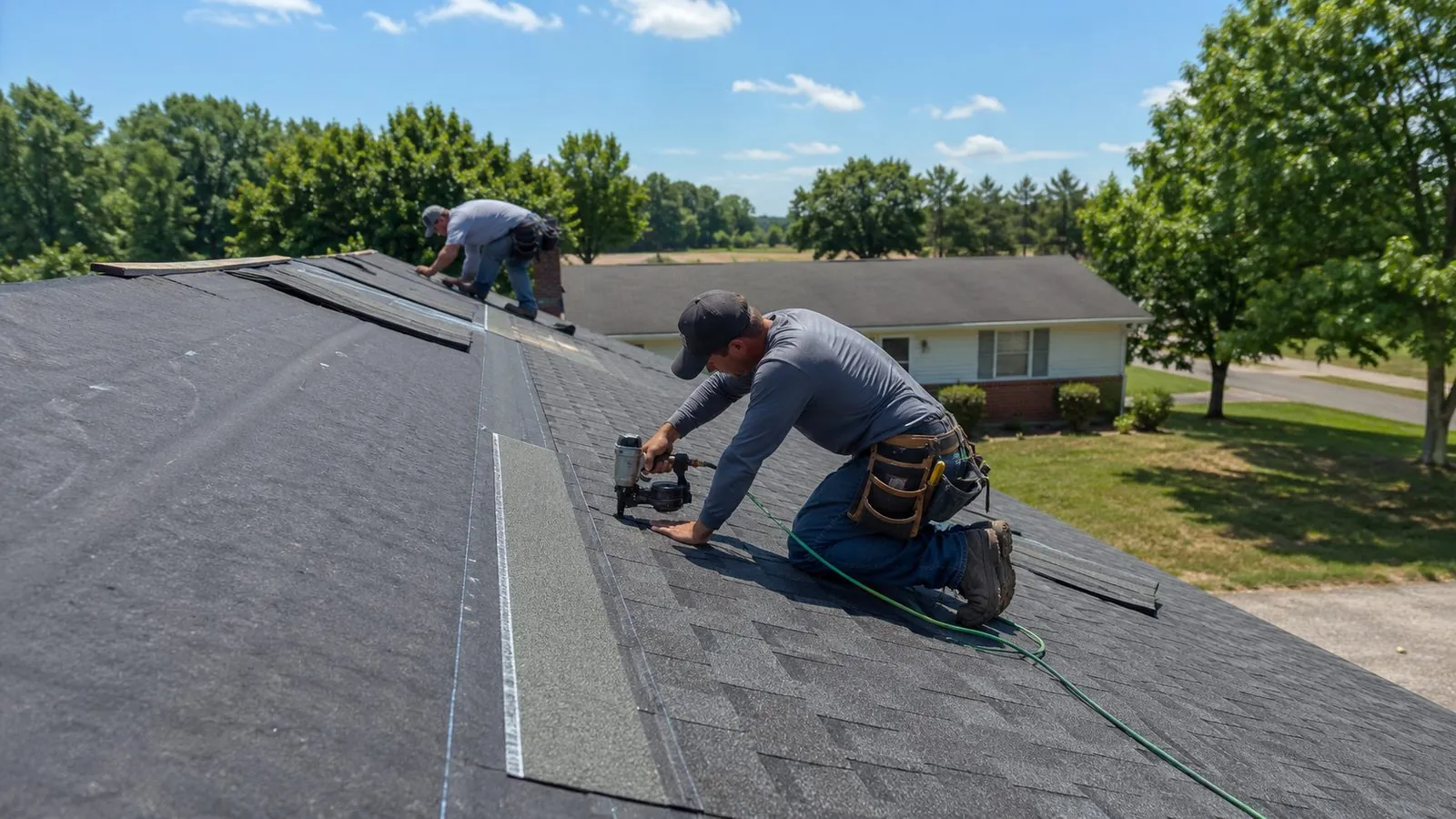
Most roof replacements in western Kentucky take one to three days once the crew is actually on your roof, but the full process, from your first call to the final walk-off, usually runs two to four weeks. The difference between those two numbers is scheduling, permitting, and material ordering, none of which happens on your roof.
Quick answer: Installation itself: 1 to 3 days for a typical asphalt shingle roof. Start to finish, including the estimate, contract, permit, and material lead time: 2 to 4 weeks in most cases.
How long does the whole process take, from first call to walk-off?
Homeowners almost always ask about install day, but the number that actually affects your calendar is the whole project. Here’s roughly how the phases break down for a typical single-family home in this area.
| Phase | Typical time |
|---|---|
| Inspection and written estimate | Same day to a few days |
| Contract signing to scheduled start | 1 to 3 weeks, longer in peak spring season |
| Permit (where required) | Days to a couple of weeks, set by your city or county |
| Material ordering and delivery | A few days for in-stock shingles; longer for custom metal panels |
| Tear-off and installation | 1 to 3 days for asphalt, longer for metal or a complex roof |
| Final walk-through and inspection | Same day as completion |
These are typical ranges for a single-family home in western Kentucky and northwest Tennessee. Your actual timeline depends on your roof, your local permit office, and the season you book in.
What happens during the planning and prep phase, and how long does it take?
Nothing touches your shingles during this stretch, but it’s the part that decides your actual completion date.
- Inspection and estimate. A contractor walks the roof, measures it, and gives you a written quote, usually the same day or within a day or two.
- Contract and scheduling. Once you sign, you get a spot in the crew’s schedule. This is where most of the waiting happens. Spring, when storm season and pent-up winter repairs collide, is our busiest stretch, and a good crew’s calendar can run two to three weeks out or more.
- Permit. Kentucky doesn’t set one statewide rule for roofing permits. According to the Kentucky Business One Stop portal, zoning and building permits are handled locally, and requirements vary by city and county, so you’ll want to check with your local building or zoning office. Your contractor should already know the process for your area, but it’s worth confirming yourself, since an unpermitted job can complicate an insurance claim or a future home sale.
- Material ordering. In-stock architectural shingles from a major brand are usually available within days. Standing-seam metal panels are a different story: many are custom-fabricated to your roof’s measurements, which can add real time to the front end of the project before a crew ever shows up. Ask your contractor for their current lead time on panels when you’re deciding on a start date.
If your roof needs a full tear-off rather than an overlay, expect the planning phase to run a bit longer since your contractor has to plan for disposal and, possibly, decking repair.
How many days does the actual installation take once the crew arrives?
This is the part most homeowners picture, and it’s genuinely fast compared to the weeks of lead-up.
According to GAF, an asphalt shingle roof replacement on an average-sized home can often be completed in one to two days. Angi’s research points to a similar one-to-three-day range for standard asphalt jobs, with a straightforward one-story roof sometimes wrapped up in a single day by a skilled crew. Here’s how that breaks down by material.
| Roofing material | Typical install time (Angi) |
|---|---|
| Asphalt shingle | 1 to 3 days |
| Standing-seam or exposed-fastener metal | 7 to 14 days |
| Tile or slate | 6 to 12 days |
Ranges reflect a typical single-family home. Metal’s longer window reflects the extra detail work at seams, flashing, and penetrations, not that crews are working slower.
Inside an asphalt install, the day itself moves through recognizable steps: tear-off (usually a few hours), any decking repair the crew finds (a few hours to an extra day), underlayment and flashing, shingle installation, ridge capping, and a final cleanup with a magnetic sweep for stray nails. Many contractors schedule a building inspection as the last step before the job is officially closed out. At Fit Roofing, Erick personally inspects every finished roof, makes sure the cleanup is done fully and properly, and doesn’t call the job done until you’re 100% satisfied.
Curious what all of this actually costs, not just how long it takes? We’ve broken down 2026 pricing by material and home size in our roof replacement cost guide.
What can make a roof replacement take longer than expected?
A handful of things push a job past the typical range, and most of them are impossible to know about until the crew is already up there.
- Steep or complex rooflines. Pitches steeper than about 8:12 generally require extra safety gear and slow the work down. A roof with lots of valleys, dormers, and penetrations simply needs more cutting and detail work than a plain gable.
- Rotted or damaged decking. The plywood under your shingles can only be evaluated once the old roof is off. If a section needs replacing, that’s real, unavoidable added time, usually a few hours per section rather than a full extra day, but it adds up on a roof with widespread issues.
- Weather. Rain in the forecast is the most common reason a completion date slips a day. Frost or ice on the deck forces a delayed start for crew safety. Spring in western Kentucky brings our most active severe weather, which is also our busiest scheduling season, so plan around both.
- Difficult site access. Tight landscaping, nearby structures, or a driveway that can’t fit a dumpster or material delivery all slow staging and cleanup.
- Permit turnaround. Because permitting is handled locally rather than statewide, how fast your paperwork clears depends entirely on your city or county office’s current workload.
How far ahead should you schedule a roof replacement in western Kentucky?
If you have any flexibility, book before storm season gets going, not after. Spring hail and wind events send a wave of homeowners looking for a roofer at the same time, which stretches out every crew’s calendar right when you’d most want a fast turnaround. Booking in late winter or early spring, before the rush, generally gets you a shorter wait to a scheduled start date.
If you’re working around a known event, like an insurance claim deadline or a home sale, tell your contractor up front. A good crew will work with you on sequencing the permit, materials, and schedule to hit a real date instead of a best guess.
Not sure whether your roof needs a full replacement or just a repair? We’ll come take a look, give you a straight answer, and if it is time for a new roof, walk you through exactly what your timeline will look like before you sign anything.
Questions
Frequently Asked Questions
How long does a roof replacement take from start to finish?
Most homeowners are looking at two to four weeks from signing a contract to the crew finishing cleanup, though the actual install is usually done in one to three days. The gap between those two numbers is scheduling, permitting, and material lead time, not work happening on your roof.
How long does it actually take to install a new roof once the crew arrives?
For a typical single-family home getting asphalt shingles, one to three days once the crew is on site, according to Angi and GAF. A simple one-story roof in good shape can be done in a single day. A steep, complex roof, or one where the crew finds rotted decking, can stretch to three days or more.
Do I need a permit before a roof replacement in Kentucky?
It depends on where you live. Permit rules in Kentucky are set locally, not statewide, so requirements and turnaround times differ by city and county. Your contractor should know your local office's process, but it's worth confirming with your city or county building department before you schedule work.
Does weather delay a roof replacement in western Kentucky?
Yes. Rain in the forecast can push a start date or completion by a day, and frost or ice on the roof deck forces a delayed start for crew safety. Spring is our most active storm season here, which is also when scheduling backs up the most, so book early if you want a spring slot.
Does a metal roof take longer to install than shingles?
Generally yes. Angi's data puts metal roof installation at roughly 7 to 14 days versus 1 to 3 for standard asphalt, since metal involves more detail work at seams, flashing, and penetrations. Ask your contractor for their current lead time on panels when you book, since that can add time before installation even starts.
Storm Or Planned, We've Got You
Roof emergency, or just planning ahead? Either way, one call fixes it.
Storm damage gets answered day or night. A new roof gets a straight, no-pressure estimate. Same crew, same standard, every time.