
How Much Does a Roof Replacement Cost in Western Kentucky? (2026)
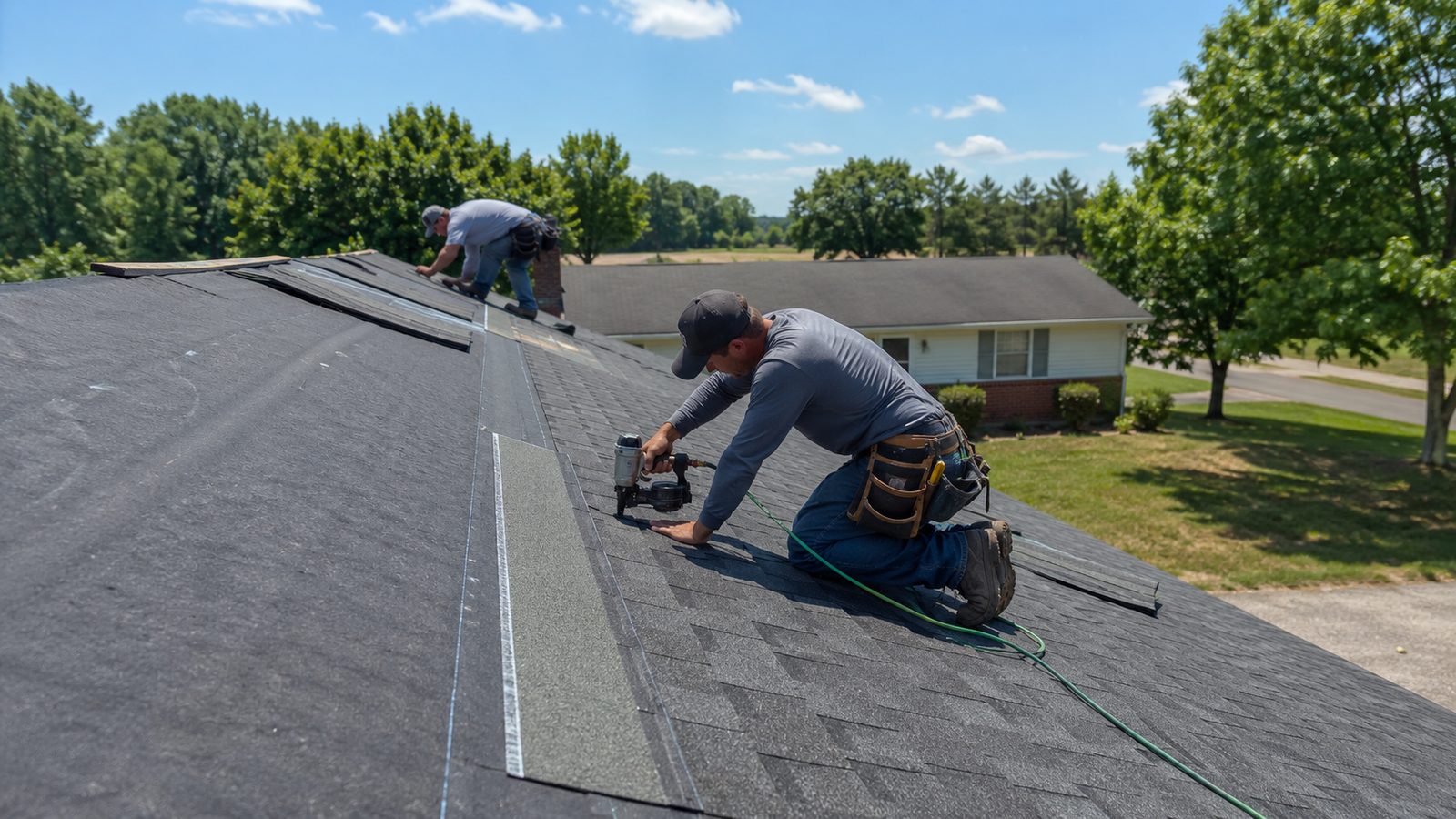
In western Kentucky, most homeowners pay $7,000–$17,000 to replace an asphalt shingle roof in 2026. Smaller homes and simpler rooflines often land at the low end; larger or steeply pitched roofs, unexpected decking damage, or a switch to metal can push that number well beyond the range.
What does a roof replacement actually cost in western Kentucky in 2026?
For most homes in this area, installed asphalt shingles run $4.50–$7.00 per square foot, materials and labor included. That works out to $7,000–$17,000 for a complete replacement on a typical single-story home, based on 2026 contractor pricing data from across Kentucky. Western KY and northwest Tennessee tend to come in at or below the state average — roofing labor here runs roughly $30–$55 per hour, somewhat less than in Louisville or Lexington.
One thing worth knowing before you get a quote: roofers price by the "square," where one square equals 100 square feet of roof surface. Because of slope, your roof surface is almost always larger than your home's footprint. A 1,800-square-foot ranch house often has 2,000–2,400 square feet of actual roof to cover. That gap matters when you're comparing bids.
The table below gives rough project ranges by home size for this region. Take these as estimates — actual quotes depend on your specific roof's pitch, condition, and complexity, and on what we find once the old shingles come off.
| Home footprint | Asphalt shingles (est.) | Standing-seam metal (est.) |
|---|---|---|
| Under 1,500 sq ft | $6,000–$9,500 | $14,000–$21,000 |
| 1,500–2,000 sq ft | $8,500–$13,000 | $18,000–$28,000 |
| 2,000–2,500 sq ft | $10,500–$16,500 | $23,000–$35,000 |
| Over 2,500 sq ft | $14,000–$21,000+ | $28,000–$42,000+ |
Ranges are estimates based on 2026 Kentucky contractor pricing data. Your actual cost depends on roof pitch, complexity, tear-off, and decking condition discovered during the job.
What pushes the price higher — or keeps it down?
Material choice and roof size drive the bulk of the cost. But four other factors can move your final number significantly, and two of them are things no one knows until the old shingles are off.
- Roof pitch and complexity. Steeper roofs are slower and more hazardous to work on. Multiple valleys, dormers, skylights, and chimney flashing each add labor time and material. A straightforward gable roof on a ranch home costs meaningfully less per square foot than a complex hip roof with a bonus-room dormer.
- Tear-off and disposal. A legitimate replacement almost always starts by pulling off the existing shingles, hauling them away, and starting clean. That labor and disposal cost should appear as its own line item in any estimate you receive. Be skeptical of bids that skip it.
- Decking damage. The decking — the plywood layer your shingles nail into — can only be evaluated after tear-off. In western KY, we find rotted or soft sections fairly often, particularly after years of slow leaks or ice storm damage. Replacing damaged decking runs $2–$5 per square foot and gets added to the project when we find it. In This Old House's survey of 1,000 homeowners who recently replaced a roof, hidden damage like this turned up on about 24% of projects — common enough to plan for, even though labor and materials were still the biggest drivers of final cost.
- Material upgrade. Stepping up from 3-tab shingles to architectural shingles, or from asphalt to metal, changes the total considerably. The next section covers that in detail.
One factor that works in your favor here: western KY and northwest Tennessee both tend toward the lower end of regional labor ranges. Rural markets simply don't carry the overhead of larger metros.
How do the main roofing materials compare on cost, lifespan, and fit for this region?
Architectural asphalt is what most western Kentucky homeowners choose — affordable, reliable, and suited to the weather we get here. Standing-seam metal is the right call for homeowners who want to put on a roof and never replace it again. Here's how the main options stack up side by side.
| Material | Installed cost/sq ft (KY, 2026) | Typical lifespan | Notes for this region |
|---|---|---|---|
| 3-tab asphalt | $4.50–$5.50 | 15–20 years | Lowest upfront cost; lighter construction; less wind resistance than architectural |
| Architectural asphalt | $5.50–$7.00 | 25–30 years | Best value for most homes; thicker, better wind and hail performance; our most common install |
| Exposed-fastener metal | $6–$9 | 40–50+ years | Practical for outbuildings and barns; visible screws require periodic re-tightening |
| Standing-seam metal | $10–$14 | 40–70 years | Best long-term value; concealed fasteners; handles hail well; most homeowners won't replace it twice |
| Cedar shake | $10–$15 | 20–30 years | Natural look; high maintenance in KY's humidity; algae and rot risk without regular treatment |
| Slate | $15–$25+ | 75–100+ years | Premium and historic homes; very heavy — most homes need a structural review before installation |
According to the Metal Roofing Alliance, a properly installed metal roof lasts 40–70 years. The National Association of Home Builders puts standard asphalt shingles at 20–30 years. In our climate — hot, humid summers, a real hail season every spring, and the occasional ice storm — roofs at the lower end of those ranges are common without good attic ventilation and routine maintenance.
See our metal roofing page for more on what makes standing seam worth the premium here, or our shingle roofing page for what goes into a quality architectural asphalt installation.
Will homeowners insurance help pay for a roof replacement?
Insurance covers sudden, unexpected damage — hail, high wind, lightning, a fallen tree. It does not cover a roof that simply aged out. In western Kentucky, where spring storms and hail are the main reasons roofs get replaced ahead of schedule, that distinction matters more than homeowners often realize.
A standard Kentucky HO-3 homeowners policy covers your roof against sudden, unexpected perils such as wind, hail, lightning, and falling objects. What it does not cover is normal aging, wear and tear, or damage that results from deferred maintenance. If your 22-year-old shingles finally give out, that's not a covered event — and filing a claim for it won't go well.
Two things to verify on your policy before storm season:
- ACV vs. RCV coverage. Actual cash value (ACV) pays what your roof is worth today, after years of depreciation. Replacement cost value (RCV) pays what it actually costs to install a new one. Many Kentucky insurers have shifted older roofs to ACV, which can mean your payout covers only a small fraction of the replacement cost. On a roof that's 20 years into a 25-year lifespan, the depreciation can be steep.
- Separate wind and hail deductibles. Many Kentucky carriers now apply a 1–2% deductible specifically for wind and hail claims, rather than your standard flat deductible. On a $300,000 home, that's $3,000–$6,000 out of pocket before insurance pays a dollar — and it's often buried in the fine print of your declarations page. Check it now rather than after a storm.
One local development worth knowing: the Strengthen Kentucky Homes Program offers eligible homeowners grants of up to $10,000 toward a FORTIFIED™ roof built to the Insurance Institute for Business & Home Safety (IBHS) wind-resistance standard. Created by House Bill 256 and now accepting applications at skh.ky.gov, the grant is paid directly to your contractor after the work is certified. It's worth a look before you replace — a FORTIFIED roof can also qualify you for an insurance premium discount.
If you've had recent storm damage and aren't sure whether it's a covered claim, call your insurance agent first — not a contractor, and definitely not the door-to-door crew that showed up the morning after. Document everything with photos before anyone touches the roof.
How do you get a fair estimate — and recognize a bad one?
Get at least three written, itemized quotes. A legitimate roofing estimate breaks out labor, materials, tear-off and disposal, any decking repair allowance, and cleanup as separate line items. A one-line lump sum with no breakdown is a red flag worth paying attention to.
After major storms, door-to-door crews work western Kentucky neighborhoods hard. They're not always dishonest, but the pattern to watch for is: pressure to sign the same day, out-of-state contact numbers, promises to handle your insurance claim before anyone has even looked at your roof. A contractor with a real local presence doesn't need to canvass the neighborhood the morning after a storm.
A complete estimate should always specify the shingle brand and product name (not just "architectural shingles"), confirm they're doing a full tear-off, spell out both material and workmanship warranty terms, and explain how cleanup and nail removal are handled. We use magnetic sweeps and tarps to protect landscaping — it's worth asking any contractor you're comparing how they manage that.
When in doubt, call us. Free inspections, no pressure, and we'll give you a straight read on what your roof actually needs — whether that's a repair or a replacement.
Frequently asked questions
How long does a roof replacement take in western Kentucky?
Most single-family homes in western Kentucky take one to two days. Larger roofs, complex designs with multiple valleys or dormers, or jobs that uncover significant decking damage can stretch to three days. Weather delays and material deliveries can add time too, especially during spring storm season when roofing crews are in high demand.
Do I need a permit for a roof replacement in Kentucky?
Permit requirements vary by city and county in Kentucky — there is no single statewide rule for roofing. Most full replacements do require a local building permit. Your contractor should pull the necessary permit before work begins; if they don't mention it, ask. Unpermitted work can create problems with insurance claims and future home sales.
Can I just add a new layer of shingles over the old ones?
Many homes can receive one overlay — new shingles laid directly over an existing layer — but most building codes allow only two layers total before a full tear-off is required. Overlays cost less upfront but hide decking problems, add weight to the structure, and can shorten the new roof's lifespan. A full tear-off is almost always the better long-term call, and it's what we recommend for most replacements.
How does my roof's age affect what insurance pays?
Older roofs are often paid out at actual cash value (ACV) instead of full replacement cost value (RCV). With ACV, the insurer deducts depreciation based on the roof's age — on a 20-year-old shingle roof, that can mean your payout covers only a fraction of the replacement cost, even after a legitimate storm claim. Check your policy or call your agent now, before a storm, to know which type of coverage you have.
Need a roof you can trust?
Free, no-pressure inspections across western Kentucky & northwest Tennessee.
Call 270-348-7663