
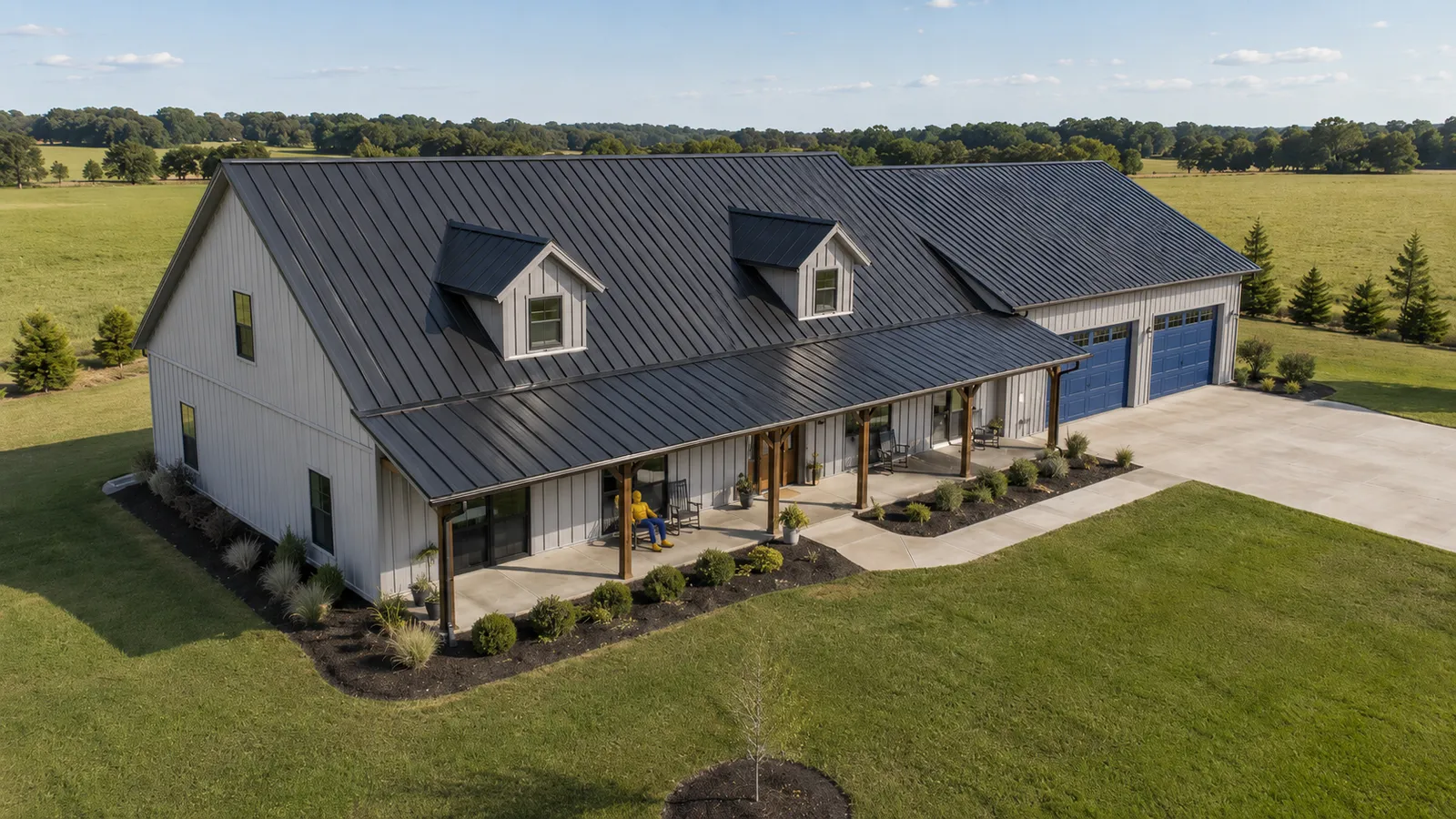
Metal Roof vs. Shingles: Which Handles Hail Better in Kentucky?
By Fit Roofing
Hail hits asphalt shingles and metal roofing differently, and that difference decides how much protection you’re actually buying. Shingles can bruise and lose granules in ways you can’t see from the ground. Metal usually just dents. Both materials can carry a UL Class 4 impact rating, but that rating means something a little different depending on which one earns it.
Quick answer: Hail usually dents a metal roof without breaching it, while it can bruise and strip granules from asphalt shingles in ways that shorten their life even when the damage isn’t visible from the ground. Metal costs more upfront and lasts two to three times longer. Which one makes sense for you comes down to how long you’re staying, your budget, and how much hail your property actually sees.
How does hail actually damage a shingle roof compared to a metal roof?
Differently enough that it changes what you should be worried about. On asphalt shingles, a hard hail strike can fracture the fiberglass mat underneath the shingle’s surface, a problem roofers call bruising. A bruised shingle often looks fine from the ground and only shows up as a soft, slightly spongy spot under direct pressure, but the mat fracture is real damage that speeds up how fast that shingle fails. Hail also knocks granules loose in circular patches, and once those granules are gone, the asphalt layer underneath is exposed to UV and weathers faster. State Farm notes that while a typical roof lasts around 20 years, roofs in hail-prone areas may need replacing every 7 to 10 years instead.
Metal behaves differently under the same impact. Instead of cracking or fracturing, a hailstone big enough to matter usually just dents the panel. The panel keeps doing its job, shedding water, staying sealed at the seams, protecting the deck underneath, even with a visible mark on the surface. That’s the key idea to hold onto: a dent is cosmetic, a crack or puncture is functional. Metal roofing rarely gets the second kind from hail; asphalt shingles can get both.
Western Kentucky isn’t a stranger to this. A published analysis of NOAA Storm Prediction Center storm reports counts 6,378 hail events across Kentucky between 1955 and 2024, with May the busiest month of the year for hail. That’s a statewide tally compiled by a third party rather than a Murray-specific figure, but it reflects how routinely this region deals with spring and early-summer hail.
What does a UL 2218 Class 4 impact rating actually mean?
It means a roofing sample survived Underwriters Laboratories’ toughest hail simulation, and that both shingle and metal products can earn it. UL 2218 is a lab test, not a marketing label. UL drops solid steel balls onto a mounted sample and checks whether the material cracks, splits, or lets the ball punch through to the underside. The four classes use increasingly large steel balls to simulate bigger, more energetic hail:
| Class | Steel ball diameter tested |
|---|---|
| Class 1 | 1.25 inches |
| Class 2 | 1.50 inches |
| Class 3 | 1.75 inches |
| Class 4 | 2.00 inches |
To earn Class 4, the highest rating, a sample has to take two hits in the same spot from a 2 inch steel ball dropped from 20 feet with no crack reaching through to the underside. Both asphalt shingles and metal panels can pass. On the shingle side, it usually means a reinforced, modified product built specifically for impact resistance, not a standard three-tab shingle. On the metal side, steel and aluminum panels of sufficient gauge commonly earn it as well, since metal generally resists a full crack-through even when the impact leaves a mark.
Here’s the honest limit of the rating: UL’s own standard states that the test does not evaluate how weathering, aging, or temperature affect impact resistance over time. A Class 4 rating tells you how a brand new sample performed once in a lab. It doesn’t promise your roof will look undamaged after a real Kentucky hailstorm fifteen years from now, and for metal specifically, it says nothing about whether a dent will show. It’s a genuine indicator of durability, not a guarantee against cosmetic wear.
Can a Class 4 roof actually lower your homeowners insurance bill?
Often, but the amount and the rules are set by your insurance company, not by any universal standard, so this is a conversation to have with your own agent rather than an assumption to build a decision around. Several major carriers, State Farm among them, offer a discount for homes with qualifying impact-resistant roofing products in states where they’ve made that discount available, Kentucky included. But only specific certified products qualify, you typically need documentation from the manufacturer or installer, and in most cases you need to confirm eligibility with your carrier before the roof goes on, not after.
How much that discount is worth varies widely. Texas, which was the first state to require carriers to offer some form of impact-resistant discount, is explicit on this point: its Department of Insurance says the discount amount for each class of roofing material is set by each insurance company on a company-by-company basis. Kentucky has no equivalent blanket mandate for ordinary Class 4 products. What Kentucky does have is a 2024 law, House Bill 256, that takes a different and stricter approach: starting March 1, 2026, insurers writing wind or hail coverage in the state must offer a premium discount or rate reduction, where actuarially justified, to homes certified under the IBHS FORTIFIED Home or FORTIFIED Roof standard. That’s a separate, more involved whole-roof certification, not the same thing as simply choosing a Class 4 shingle or a metal roof off the shelf. Kentucky’s Strengthen Kentucky Homes grant program can help offset the cost of reaching that certification for qualifying homeowners.
One more wrinkle worth knowing before you buy: some policies handle cosmetic damage on metal roofing differently than functional damage. It’s common for an insurer to add a cosmetic damage exclusion, or offer one in exchange for a premium credit, that specifically excludes payment for hail damage that only affects appearance, denting or pitting, when the roof still performs as a weather barrier. That can matter a lot for a metal roof, since denting is exactly the kind of damage metal is most likely to show. Ask your agent directly whether your policy has this kind of exclusion or endorsement, because it changes the practical value of choosing metal for hail protection. None of this is a substitute for reading your own policy or talking to your agent, and we’d never tell you whether or how to file a claim. That call is between you and your insurer.
How do the lifespan and the cost really compare?
Metal costs more to install and lasts a lot longer, and the numbers back that up plainly.
| What the research shows | Figure | Source |
|---|---|---|
| Metal roof lifespan | 30 to 50+ years | Metal Roofing Alliance |
| Asphalt shingle lifespan | 12 to 20 years | Metal Roofing Alliance |
| Asphalt shingle installed cost (2026) | $3.44 to $12 per sq ft | This Old House |
| Standing seam metal installed cost (2026) | $17.74 to $23.95 per sq ft | Homewyse |
The Metal Roofing Alliance, an industry group for metal roofing and worth reading with that in mind, puts a metal roof’s life at 30 to 50-plus years against 12 to 20 years for asphalt shingles, roughly 2 to 3 times longer. On the cost side, This Old House prices a typical 2026 asphalt shingle installation at $6,885 to $23,993 for a 2,000 square foot roof, depending on shingle grade and region. Metal runs well above that. Based on Homewyse’s 2026 national per-square-foot rate, a 2,000 square foot standing seam roof lands somewhere around $35,000 to $48,000 installed, which is why metal is often described as costing two to three times what asphalt costs upfront. The trade you’re making is real: a bigger check now for a roof that should still be doing its job when a shingle roof installed the same week would already be on its second or third replacement.
If your budget can’t stretch to metal right now but hail is a real concern, a Class 4 impact-resistant asphalt shingle is worth asking us about. It won’t match metal’s lifespan, but it closes some of the durability gap for a fraction of the cost difference.
So which one should you actually choose?
There’s a real answer here, not just “it depends.” Weigh these four things in order:
- How long you plan to stay in the home. Metal’s higher upfront cost pays off over decades. If you’re planning to sell within 5 to 7 years, a well-installed shingle roof is often the more sensible financial choice, even though metal can help at resale. If this is a forever home, metal’s math gets a lot better.
- Your budget today versus the total cost of ownership. Shingles win on upfront price every time. Metal wins if you count the 2 to 3 shingle roofs it can outlast over the same span of years.
- How much hail your property actually sees. A rural property in open pasture with a long history of hail is exactly where metal’s functional durability earns its keep. A property with more tree cover and a lighter hail history has less riding on the material choice.
- HOA rules, style, and what your policy actually covers. Check any HOA covenants before committing to metal. And after everything above, go back to the insurance conversation: what your specific policy pays for cosmetic versus functional hail damage should be part of the decision, not an afterthought once the roof is already on.
Metal isn’t the right call for every homeowner or every budget, and a straight answer has to admit that. If you’re weighing metal against shingles mainly because of hail, tell us about your property and how long you plan to stay, and we’ll walk through the real numbers for your roof rather than push you toward the more expensive option. If you’re also curious how the two materials compare in our summer heat, we cover that separately in Metal Roofing in Kentucky’s Heat. You can see the details on both systems we install on our metal roofing and shingle roofing pages.
Questions
Frequently Asked Questions
Does hail damage a metal roof the same way it damages shingles?
No. Hail typically dents metal roofing without breaking through it, while on asphalt shingles it can fracture the mat underneath the surface and knock granules loose, damage that shortens the shingle's life even when it is not visible from the ground. The dent on a metal roof is usually cosmetic. The bruising and granule loss on a shingle roof is functional damage that gets worse over time.
What does a UL 2218 Class 4 rating mean?
It means the roofing material passed UL's toughest impact test, taking two hits from a 2 inch steel ball dropped from 20 feet in the same spot without cracking or splitting through. Both asphalt shingles and metal roofing can earn a Class 4 rating. It is a strong indicator of impact resistance, but it does not promise the roof will never dent or show any wear from hail.
Will a Class 4 roof lower my homeowners insurance in Kentucky?
It might. Many carriers offer a premium discount for qualifying Class 4 products, and Kentucky separately passed a law requiring insurers to offer a discount on homes certified to the stricter IBHS FORTIFIED standard starting March 2026. Discount amounts and eligibility are set by each insurance company, so ask your own agent what your specific policy offers before you count on a savings.
How much more does a metal roof cost than an asphalt shingle roof?
Metal typically runs about two to three times more per square foot to install than asphalt shingles. On a typical home that is several thousand dollars more upfront, but metal also lasts two to three times as long, so the gap narrows when you look at cost over the roof's full lifespan instead of just the install.
Is metal roofing worth it for hail protection in western Kentucky?
For homeowners planning to stay long term, or who have already dealt with repeat hail damage, often yes. It costs more upfront but resists functional hail damage better and lasts far longer. If your budget is tighter or you plan to move within a few years, a Class 4 impact-resistant shingle is a reasonable middle ground.
Storm Or Planned, We've Got You
Roof emergency, or just planning ahead? Either way, one call fixes it.
Storm damage gets answered day or night. A new roof gets a straight, no-pressure estimate. Same crew, same standard, every time.