
Standing Seam vs. Exposed Fastener Metal: A Plain-English Comparison
By Fit Roofing
Standing seam and exposed fastener are the two main ways a metal roof gets attached to your house, and the difference in how the screws are hidden (or not) drives almost everything else: cost, upkeep, and how long you go before you think about the roof again.
Quick answer: Exposed fastener metal roofing costs roughly half as much upfront but needs its screw washers checked and eventually replaced. Standing seam costs more but hides its fasteners under locking seams, so there’s nothing exposed to the weather to wear out.
What’s the real difference between the two systems?
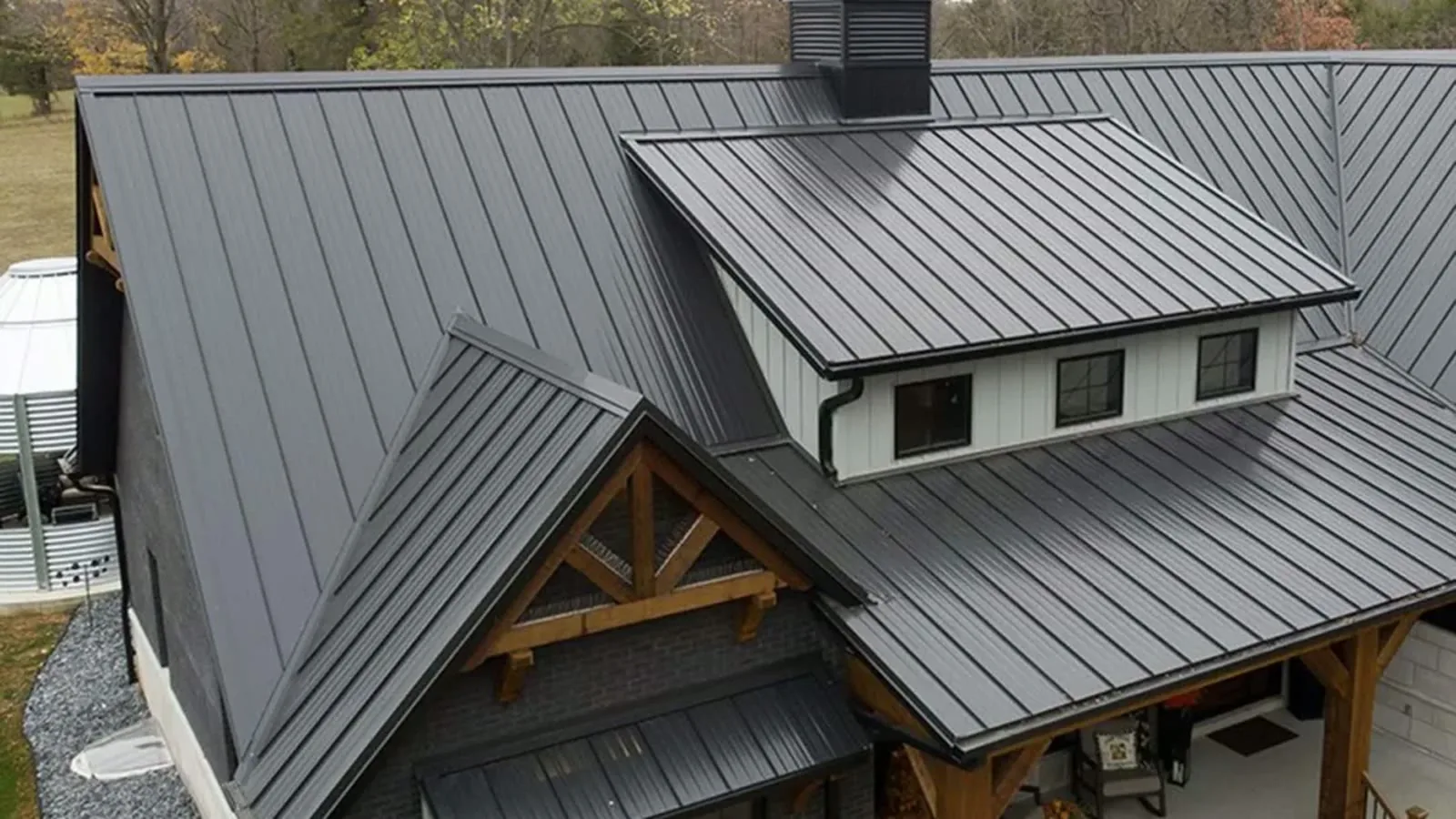
Exposed fastener panels are screwed directly through the flat part of the panel, so you can see rows of screw heads running down the roof. Standing seam panels click or mechanically seam together at raised vertical ribs, and every fastener sits hidden underneath in a clip, never touched by rain, sun, or ice.
That’s the whole distinction, but it cascades. A screw driven through metal creates a hole that has to stay sealed for the life of the roof, and that job falls to a small rubber washer under the screw head. A standing seam roof never asks a washer to do that job in the first place, because there’s no hole through the face of the panel at all.
Which one costs less upfront?
Exposed fastener wins on price, by a wide margin. Here’s how the two compare on installed cost per square foot, according to Angi’s 2026 metal roofing pricing:
| System | Installed cost per sq ft (2026) | Notes |
|---|---|---|
| Exposed fastener (corrugated) | $3.50 to $15 | Wider panels, faster install, standard fasteners |
| Standing seam | $7 to $30 | Thicker gauge metal, hidden clips, specialized seaming labor |
On a typical 2,000 square foot roof, that gap is easily several thousand dollars. Part of it is material, since standing seam panels usually run a heavier gauge steel or aluminum. The rest is labor: seaming panels together (by hand with a mechanical seamer, or with panels that snap-lock) takes more skill and time than driving screws through a pre-drilled line.
Why does an exposed fastener roof need more upkeep?
The washers do it in. Metal expands and contracts with temperature swings all year, and every cycle works the screw hole a little. Manufacturer McElroy Metal notes that this repeated expansion and contraction can wear the fastener hole into a slot larger than the washer, compromising the seal, and the rubber or neoprene washer sealing it hardens and cracks in the sun long before the metal panel itself wears out.
Sheffield Metals, a metal roofing manufacturer, recommends physically inspecting exposed fasteners at least once a year, and up to twice a year on high-exposure roofs, checking for backed-out, loose, rusted, or cracked washers. Angi’s guidance puts full washer replacement in roughly the 15 to 20 year range on a typical exposed fastener roof, though that number moves with panel length, climate, and how exposed the roof is to direct sun.
Standing seam sidesteps this entire maintenance category. Because the fastener sits in a clip under the seam, it never sees weather, and there’s no washer to dry-rot in the first place. That’s the single biggest reason standing seam costs more and needs less looking after.
Does roof pitch decide which one you can even use?
Sometimes, yes. The 2018 International Building Code sets different minimum slopes for the two systems:
- Standing seam: minimum 1/4:12 slope (a very gentle pitch)
- Through-fastened exposed panels, with sealant at the laps: minimum 1/2:12
- Through-fastened exposed panels, without sealant: minimum 3:12
The National Roofing Contractors Association goes further in its own trade guidance, recommending steeper minimums than code allows as a best practice, especially for exposed fastener panel systems. If you’ve got a low-slope porch roof, addition, or outbuilding, that code gap alone can rule exposed fastener out and point you to standing seam or a low-slope membrane system instead. We cover flatter roof options separately on our metal roofing page.
Which one actually lasts longer?
Both hold up far better than asphalt shingles, but the honest answer is that a standing seam roof is built to outlast an exposed fastener roof mainly because it has no wear-prone part. An exposed fastener roof’s weak point is always the washer, not the steel panel underneath it, so its practical service life is tied to how well someone keeps up with fastener maintenance. Skip the regular fastener checks Sheffield Metals recommends, and a leak from a failed washer will show up well before the metal itself is anywhere near worn out.
Standing seam has no equivalent weak point built into the system, which is why it’s the panel type manufacturers back with weathertightness warranties. That’s a warranty against water getting through the seams themselves, something exposed fastener systems generally aren’t offered because a screwed-through panel can’t make that same guarantee.
Which is right for a home in western Kentucky or northwest Tennessee?
It comes down to the building and the budget, not which one is “better” in the abstract.
- Primary house you plan to stay in: standing seam is usually worth the premium. Less maintenance, a cleaner architectural look, and a roof that isn’t relying on rubber washers to keep water out during our summer heat swings and winter freeze-thaw cycles.
- Barn, pole building, workshop, or carport: exposed fastener is a smart, widely used choice. These structures are often unheated, so the panels move less, and the lower cost per square foot matters more than a maintenance-free roof on a building you’re not living under.
- Somewhere in between, like a detached garage you use often: weigh how much you mind adding “check the roof screws” to your fall maintenance list against the upfront cost difference.
If you’re not sure which fits your specific roof, pitch, and budget, that’s a five-minute conversation, not a guessing game. For more on how metal stacks up against shingles generally, see our post on metal roof vs. shingles for hail and how metal performs in our summer heat.
Give us a call at 270-348-7663 and we’ll walk your roof, tell you straight which system fits your building, and get you a real number, not a guess.
Questions
Frequently Asked Questions
What is the actual difference between standing seam and exposed fastener metal roofing?
It comes down to how the panels are attached. Exposed fastener panels are screwed straight through the face of the metal, so the screw heads are visible on the roof surface. Standing seam panels lock together at raised vertical ribs, with the fasteners hidden underneath in clips where weather never touches them. That one difference in attachment is what drives most of the cost, maintenance, and lifespan gap between the two systems.
Which is cheaper, standing seam or exposed fastener metal roofing?
Exposed fastener is the budget option. Angi's 2026 pricing puts corrugated exposed-fastener panels around 3.50 to 15 dollars per square foot installed, versus roughly 7 to 30 dollars per square foot for standing seam, so standing seam can run close to double. The gap comes from thicker metal, hidden clip hardware, and more skilled labor to form and seam the panels on site.
Do the screws on an exposed fastener metal roof need to be replaced?
Eventually, yes, on most exposed fastener roofs. Every screw has a rubber washer that seals the hole, and that washer hardens and cracks with age and sun exposure. Angi's guidance puts washer replacement in roughly the 15 to 20 year range, and manufacturers like Sheffield Metals recommend physically checking exposed fasteners at least once a year, and up to twice a year on high-exposure roofs. Standing seam has no exposed washers to fail, which is the main maintenance advantage it offers.
Can I put a standing seam roof on a low-slope house?
Often, yes, more easily than an exposed fastener roof. The 2018 International Building Code allows standing seam metal roofing down to a 1/4:12 slope. Through-fastened exposed fastener roofing needs at least 1/2:12 with sealant applied at the laps, or a full 3:12 without it. If your roof is on the flatter side, that code gap can decide the question by itself.
Which should I choose for my home in western Kentucky?
For a primary residence you plan to keep long term, standing seam's lower maintenance and cleaner look usually justify the higher upfront cost. For a barn, workshop, carport, or other unheated outbuilding where budget matters more than a maintenance-free roof, exposed fastener is a legitimate, widely used choice. Neither is the wrong answer. It is a budget and use-case decision, not a quality one.
Storm Or Planned, We've Got You
Roof emergency, or just planning ahead? Either way, one call fixes it.
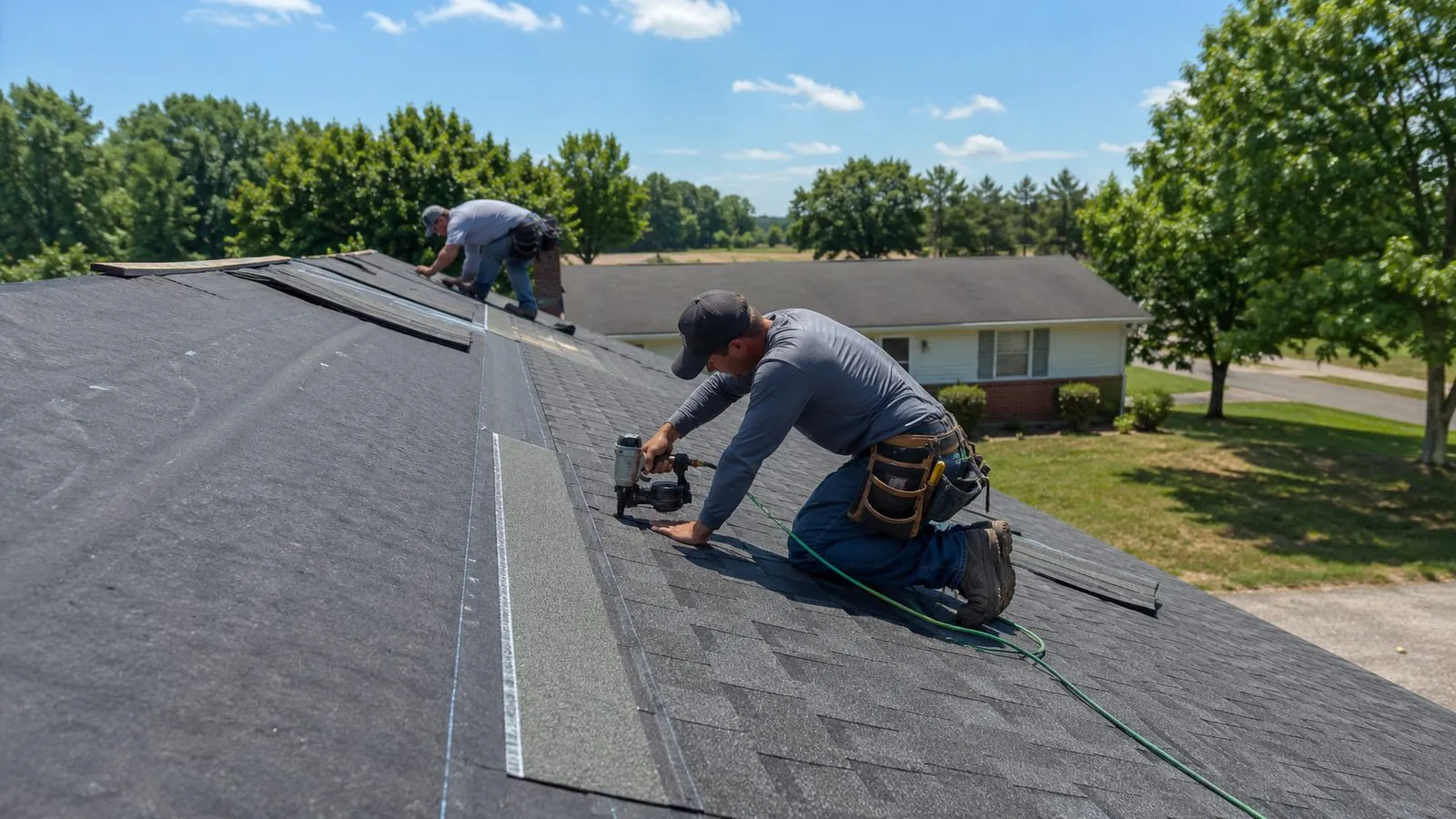
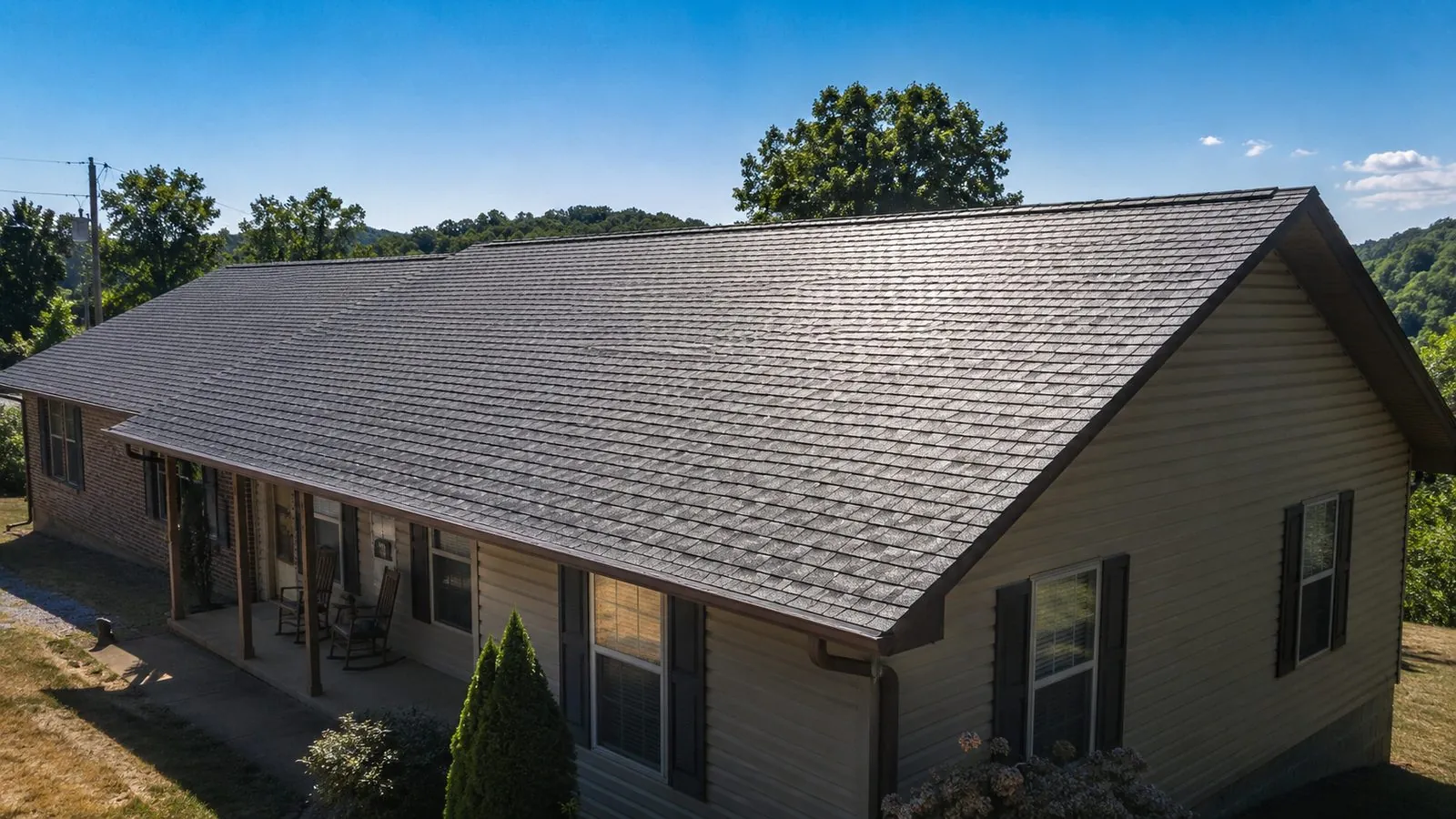
Storm damage gets answered day or night. A new roof gets a straight, no-pressure estimate. Same crew, same standard, every time.