
Does Homeowners Insurance Cover Roof Replacement? KY & TN Basics
By Fit Roofing
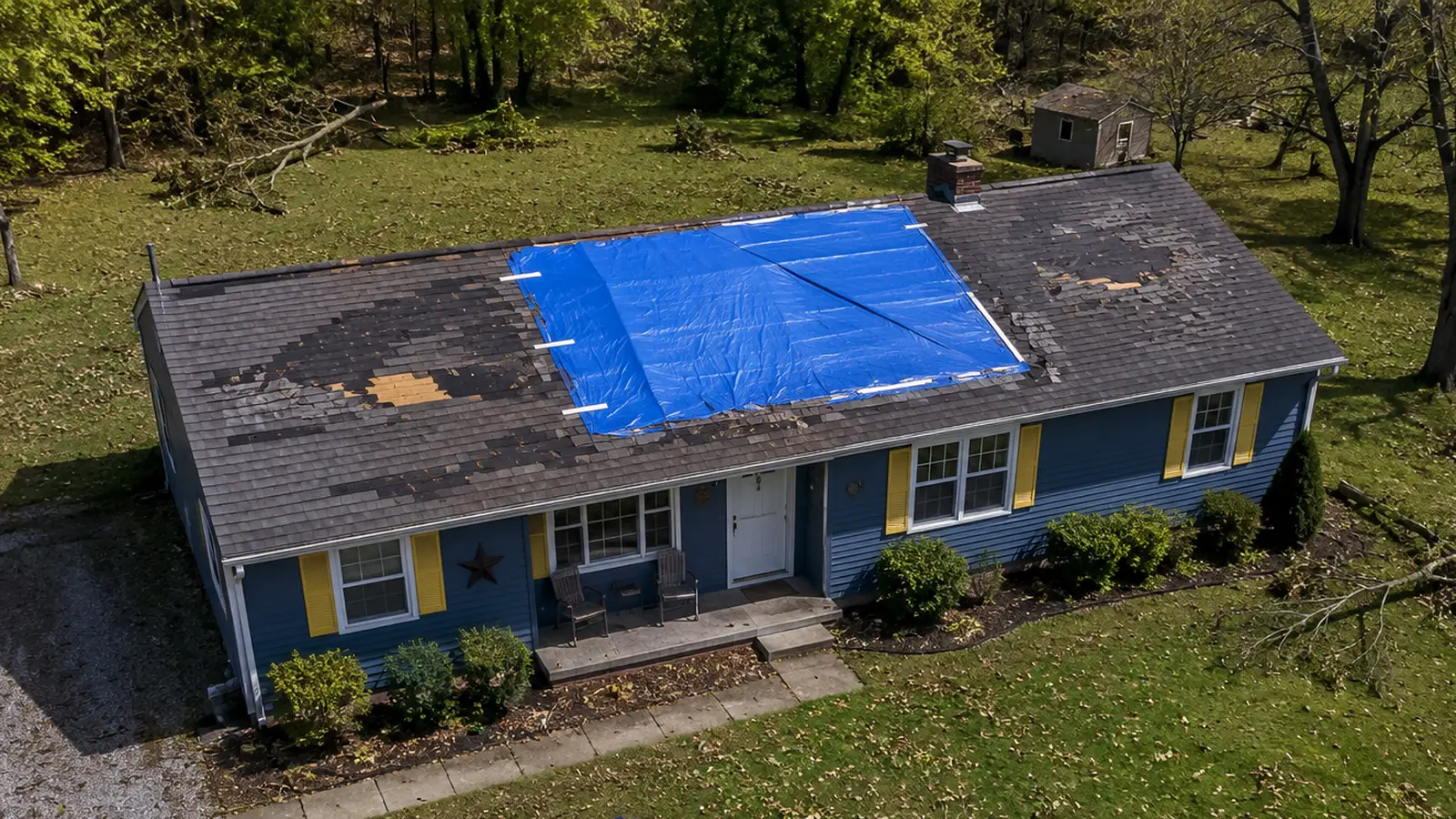
Homeowners insurance usually covers a roof replacement only when a covered event, like wind, hail, fire, or a falling tree, damaged the roof badly enough that repair won’t do. It does not pay to replace a roof that simply wore out. In Kentucky and Tennessee, the cause of the damage decides almost everything, then your policy’s terms decide how much.
Quick answer: Sudden storm or accident damage is usually covered. Age, wear, and neglect are not. Even on a covered claim, your roof’s age, your deductible, and your policy’s wording decide what you actually get paid.
This post covers whether a roof claim is covered at all. If you already know you have a covered claim and want to see how the payout math works, our walkthrough of replacement cost versus actual cash value runs the numbers on two example roofs.
One thing up front: Fit Roofing is a roofing contractor, not an insurance company, agent, or adjuster. Coverage varies by carrier, policy, and state. Your policy and your agent are the final word on what you have, and whether to file a claim is your call, not ours.
Does homeowners insurance pay for a new roof?
It does when a covered peril caused the damage. A standard homeowners policy pays to repair or replace your roof under the dwelling portion of the policy, sometimes called Coverage A, when something sudden and accidental damages it. Westfield Insurance’s 2026 guide on roof coverage names wind, hail, and fire as typical covered causes, and notes that a roof leak is generally covered when a covered event, such as a storm or a falling tree, caused it.
What insurance will not do is buy you a new roof because the old one reached the end of its life. Westfield’s guide states that damage from wear and tear, poor maintenance, or improper installation is generally not covered, and that cosmetic damage generally is not covered either. That is the line every roof claim gets judged against: did something happen to this roof, or did time happen to it?
That matters a lot around here. Severe storms are the main reason roofs in western Kentucky and northwest Tennessee get replaced ahead of schedule. Nationally, the Insurance Information Institute (Triple-I) reported in April 2026 that severe convective storms, meaning tornadoes, hail, straight-line winds, and severe thunderstorms, caused $51 billion in U.S. insured losses in 2025. Its brief also estimates that roofs account for 70 to 90 percent of total insured residential catastrophic losses. When storms cost insurers money, the roof is usually where it happens.
What roof damage is usually covered, and what is not?
Sudden damage from weather, fire, and falling objects is usually covered. Slow damage from age, wear, and lack of upkeep usually is not. Here is how the Tennessee Department of Commerce and Insurance, the Kentucky Department of Insurance, and Westfield’s 2026 roof guide describe the typical split. Treat it as the general pattern, not a promise about your policy.
| Usually covered | Usually not covered |
|---|---|
| Wind and wind-driven rain damage | Normal wear and tear, aging shingles |
| Hail damage | Damage from poor maintenance or neglect |
| Trees or other objects falling on the roof | Improper installation or poor workmanship |
| Fire | Flood damage (needs separate flood coverage) |
| Structural collapse from the weight of ice or snow | Interior water damage from a storm when the roof and walls were not damaged |
| Leaks caused by one of the covered events above | Leaks from old flashing, worn shingles, or skipped upkeep |
Two details catch people. First, a fallen tree. The Kentucky Department of Insurance says most policies pay for tree removal only when the tree lands on an insured structure, and removal is usually capped at a maximum of $500 when it does. A tree across the driveway generally isn’t covered at all. Second, cosmetic damage. Some policies carry an exclusion for damage that changes how a roof looks but not how it works, such as hail dents. If you have a metal roof, ask your agent whether your policy has a cosmetic damage exclusion.
Will insurance replace the whole roof or just the damaged part?
It depends on how much is damaged, whether the shingles can be matched, and which state you are in. Insurers pay to restore what the covered event damaged. If hail or wind only got one section, the claim may cover repairing that section rather than the whole roof.
Kentucky homeowners have a rule on their side here. Kentucky regulation 806 KAR 12:095, Section 9(1)(b), says that when replaced items do not reasonably match the rest in quality, color, and size, the insurer has to replace all items in the area so it has a reasonably uniform appearance. In Advisory Opinion 2023-08, dated October 17, 2023, the Kentucky Department of Insurance spelled out what that means for roofs:
- If one slope has to be replaced because of a covered loss, and matching shingles are not available, an entirely new roof must be installed.
- If your existing shingles are still in production, using those same shingles satisfies the rule, even if the new ones look a little different from the weathered ones.
- If the same shingles aren’t available, the Department looks at quality, color, and size to judge whether a replacement is a reasonable match.
- The Department does not allow a “line of sight” rule, where an insurer only matches the slopes you can see from the street. The whole roof counts as the area.
The advisory opinion itself notes it is not legally binding, and it gave insurers until September 1, 2024, to amend any policy forms that conflicted with the regulation. That opinion is Kentucky’s. Tennessee homeowners should read their own policy’s wording and ask their agent how matching is handled.
Shingle availability is a real issue on older roofs. Shingle lines get discontinued and colors change. A good inspection notes what is on your roof now, and our page on shingle roofing explains the types you are likely to have.
How does your roof’s age change what a claim pays?
Age usually does not decide whether storm damage is covered, but it can sharply cut what you are paid. Many policies pay older roofs at actual cash value, which subtracts depreciation for age and condition. Some carriers go further. Westfield’s 2026 guide gives the example that under its limited loss settlement for wind or hail, a roof more than 20 years old may qualify for a payment equal to 25 to 40 percent of the repair or replacement cost.
That is one carrier’s example, not a rule for every policy. The point is that two neighbors with identical hail damage can get very different checks because one roof is 6 years old and the other is 19. We walk through that math in detail in the RCV versus ACV post, along with percentage wind and hail deductibles, which can mean several thousand dollars out of pocket before coverage starts.
Age also affects the coverage question indirectly. An older roof with worn shingles gives an adjuster more room to say some of the damage was already there. Keeping records of your roof’s age and condition, like an inspection report or your replacement paperwork, makes that conversation easier.
Does insurance pay for building code upgrades?
Not always, and it is worth asking before you need it. The Kentucky Department of Insurance warns that after damage you may have to bring your home up to current building codes rather than just restoring it, and that you should ask your agent whether your policy pays for that added cost.
Coverage for code upgrades is often called ordinance or law coverage. Some policies include a limited amount, and some need it added. Your declarations page or your agent can tell you which you have.
Is there a deadline to file a roof claim?
Yes, and your policy sets it. The Kentucky Department of Insurance’s Before and After the Storm guide says most policies require claims to be filed within one year from the date of the disaster. The Tennessee Department of Commerce and Insurance advises filing as soon as possible, since policies can require you to give notice within a certain time frame.
Hail damage is easy to miss from the ground, and it does not always show up as a leak right away. That is why the Kentucky Department of Insurance tells homeowners to have the roof inspected if they were in a storm area and are not sure whether it was damaged. A free roof inspection after a big storm tells you whether there is damage worth talking to your agent about, while you are still well inside any deadline.
Can a roofer handle your claim or cover your deductible?
In Kentucky, no on both counts. KRS 367.628 bars a roofing contractor from representing you or negotiating for you on an insurance claim for roof work. A roofer may still give you an estimate and may talk with your insurer’s representative about the damage after you have filed. The same law bars a roofer, when insurance is expected to pay for the job, from offering to pay or rebate any part of your deductible to get the sale, from giving you more than $100 in gifts or referral fees, and from damaging a roof to make a claim bigger.
If someone at your door offers to eat your deductible or to handle the whole claim for you, they are describing things Kentucky law does not allow. In Tennessee, the Department of Commerce and Insurance notes that state law limits deposits on home improvement work to no more than one third of the contract price, and it recommends verifying a contractor’s license at verify.tn.gov before you sign anything. For the bigger picture on picking a roofer, see our guide on how to choose a roofing contractor.
What should you do before a storm makes this urgent?
Get the answers now, while nothing is at stake. A short list:
- Pull your declarations page. Find your dwelling coverage, your deductibles, and whether there is a separate wind and hail deductible.
- Call your agent with a few direct questions. Is my roof covered at replacement cost or actual cash value? Does my roof’s age change my coverage? Is there a cosmetic damage exclusion? Do I have ordinance or law coverage for code upgrades? What is my deadline to report a claim?
- Know your roof’s age and condition. Find the year it was installed and keep any inspection reports. If you don’t know, an inspection can give you a good estimate.
- Keep up with basic maintenance. Clear gutters, deal with small problems early, and keep records. Damage from neglect is generally excluded, so records showing you kept the roof up are worth having. Our fall roof maintenance checklist covers the basics.
- After a storm, protect the house first. The Kentucky Department of Insurance advises covering holes and removing standing water only if it is safe to do so, keeping receipts for tarps and supplies, and holding off on permanent repairs until the adjuster has seen the damage.
If a storm has already been through and you are not sure what you are looking at, our restoration page explains how storm-damaged roofs get repaired or replaced. A roofer can tell you what is actually wrong with your roof. What your policy pays is between you and your insurer.
Sources
- Westfield Insurance, “Roof Insurance Explained” (July 21, 2026)
- Insurance Information Institute (Triple-I) via Business Wire, severe convective storm insured losses Issues Brief release (April 14, 2026)
- Kentucky Department of Insurance, Before and After the Storm consumer guide (2024, updated October 2024)
- Kentucky Department of Insurance, Advisory Opinion 2023-08 on matching (October 17, 2023)
- KRS 367.628, roofing contractor restrictions (2024 Kentucky Revised Statutes, via Justia)
- Tennessee Department of Commerce and Insurance, insurance and contractor tips after Winter Storm Fern (January 30, 2026)
Questions
Frequently Asked Questions
Will homeowners insurance replace an old roof that is just worn out?
Usually not. Standard homeowners policies cover sudden damage from events like wind, hail, fire, or a falling tree. A roof that has simply aged out, curled, or worn thin is treated as a maintenance item, and replacing it is the homeowner's cost. Age can also shrink what a policy pays on a legitimate storm claim, so check your coverage before you need it.
Does insurance cover a roof leak?
Only when a covered event caused it. A leak that starts because wind tore off shingles or a limb punched through the roof is generally covered. A leak that comes from worn shingles, old flashing, or skipped maintenance generally is not. Tennessee's insurance department also notes that interior water damage from a storm is typically not covered when the roof and walls themselves were not damaged.
Can a roofer pay or waive my insurance deductible in Kentucky?
No. Under KRS 367.628, a Kentucky roofing contractor whose fee is expected to come from insurance proceeds may not offer to pay or rebate any part of your deductible to win the job. A contractor who offers to cover your deductible is offering to break the law, which tells you plenty about how the rest of the job will go.
How long do I have to file a roof claim?
It depends on your policy. The Kentucky Department of Insurance says most policies require claims to be filed within one year of the disaster, and Tennessee's department advises filing as soon as possible because policies can require notice within a set time. Your own policy's wording is the deadline that counts, so read it or ask your agent.
Will insurance pay to replace my whole roof if only part is damaged?
Sometimes. In Kentucky, a 2023 Department of Insurance advisory opinion says that if one slope has to be replaced after a covered loss and matching shingles are not available, an entirely new roof must be installed. If your existing shingles are still made, a repair with the same shingles satisfies the rule even if the colors look a little different from age.
Storm Or Planned, We've Got You
Roof emergency, or just planning ahead? Either way, one call fixes it.
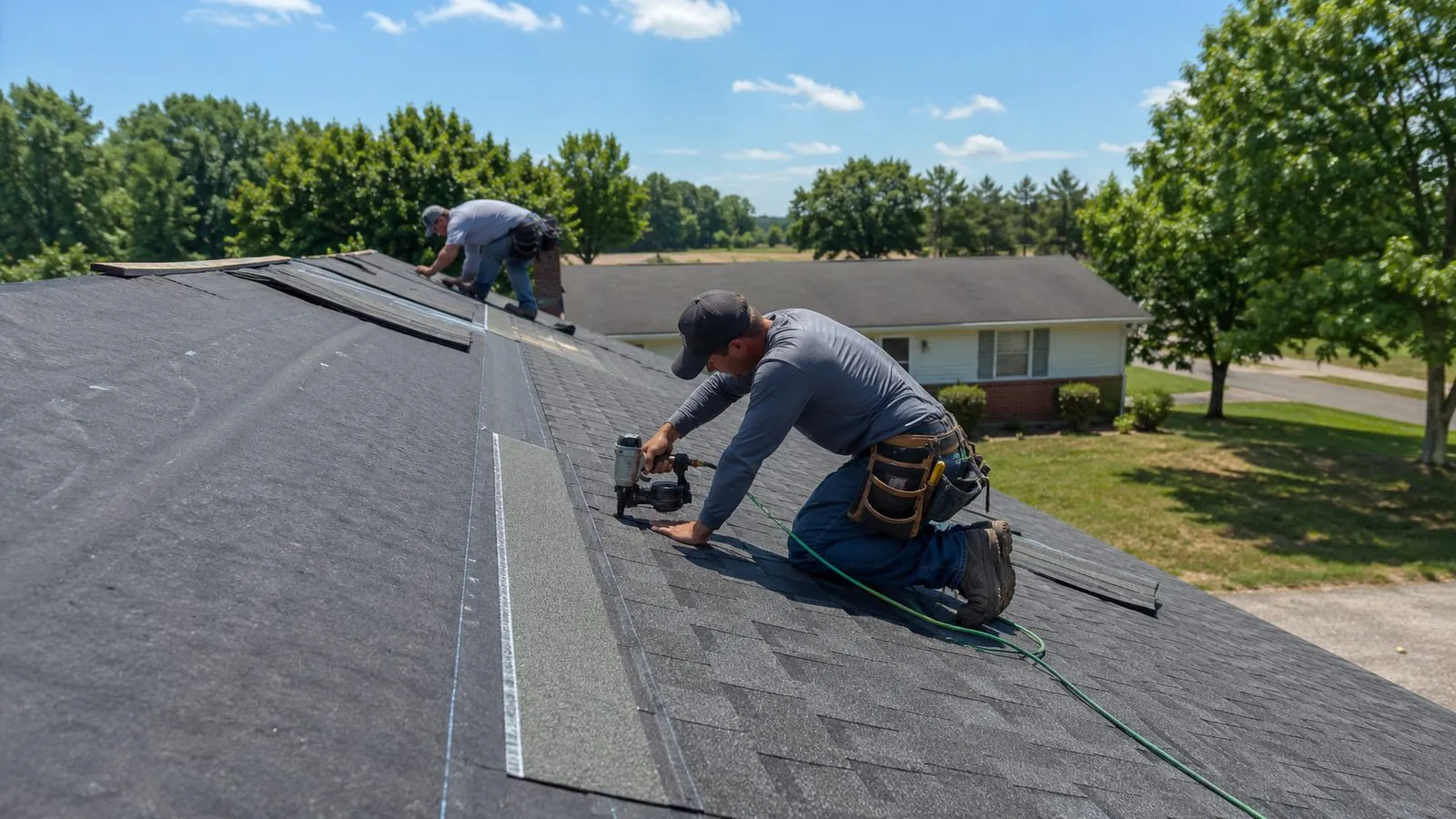
Storm damage gets answered day or night. A new roof gets a straight, no-pressure estimate. Same crew, same standard, every time.