
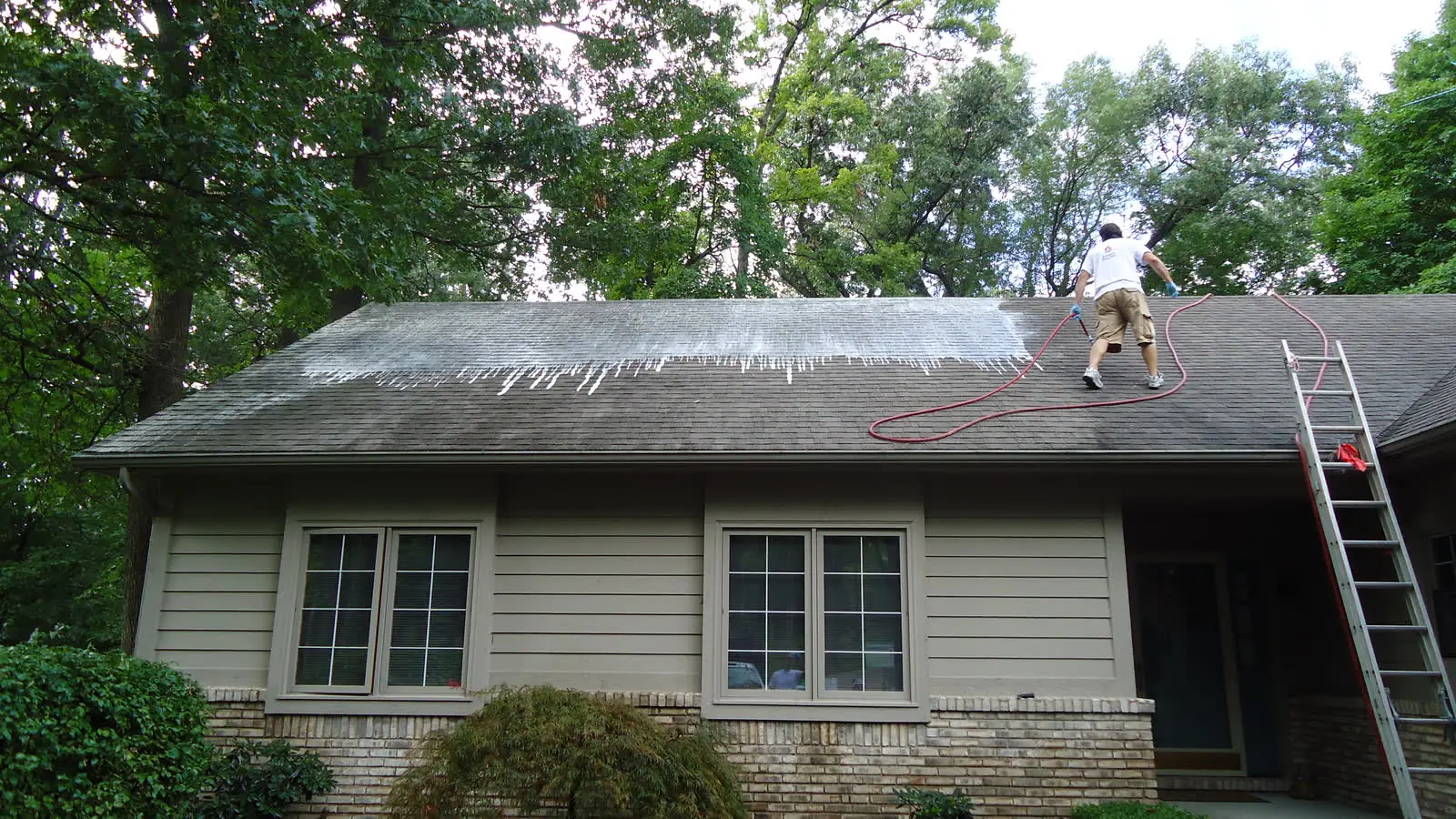
Black Streaks on Your Roof: What Causes Them and How to Remove Them
By Fit Roofing
Those dark streaks running down your shingles aren’t dirt, mold, or soot. They’re a wind-borne algae called Gloeocapsa magma, and once a spore lands on a humid, shaded roof, it spreads. The black color is the algae’s own sunscreen. The good news: it’s mostly a cosmetic problem, and it can be cleaned safely without voiding your shingle warranty.
Quick answer: Black roof streaks are algae, not dirt or mold. Skip the pressure washer. A gentle soft wash removes it without stripping granules or voiding your warranty, and a zinc or copper strip near the ridge helps keep it from coming right back.
What causes the black streaks on my roof?
It’s algae, specifically Gloeocapsa magma, a cyanobacteria that the Asphalt Roofing Manufacturers Association (ARMA) has documented spreading across asphalt shingle roofs nationwide for decades. According to research summarized by Kenyon College’s MicrobeWiki, crushed limestone used as a filler in shingle granules is “a superb source of key nutrients” for the algae, which is why it takes hold on shingles specifically rather than most other roofing materials. As colonies grow and hit strong sunlight, they form a dark protective sheath to block UV rays, and that sheath is the black streak you’re actually looking at.
Humidity is what gets it started. Western Kentucky and northwest Tennessee’s muggy summers, combined with roofs that sit under tree cover or face north with less direct sun, give the algae exactly the damp, shaded conditions it needs. Once it’s established on one roof, GAF notes that spores travel by wind or hitch a ride on birds and other animals, which is why algae staining often shows up on several roofs in the same neighborhood around the same time. It’s not that your roof did something wrong, it’s that conditions were right.
Do black streaks actually damage my roof, or is it just ugly?
Mostly just ugly. GAF describes the impact as “downgrading curb appeal and potentially impacting home value,” and neither GAF nor ARMA’s technical bulletin ties the staining itself to structural damage to the shingles. Darker, streaked shingles do absorb a little more summer heat than clean ones, and we get into how roof color and reflectivity affect your cooling bill in our post on metal roofing and Kentucky heat, but that’s a minor effect next to what algae does to how your house looks from the street.
One distinction worth making: algae is not the same thing as moss. Algae shows up as flat black or dark green streaks. Moss is fuzzy, green, and sits up off the shingle surface, and because it holds water against the roof, it’s the one that can actually work shingles loose over time. If what’s growing on your roof has texture you can see from the ground, that’s a different problem worth a closer look during your next roof inspection.
How do you get black streaks off a roof safely?
With a low-pressure soft wash, not a pressure washer. Roof cleaning is dangerous work at height, and it’s also easy to damage a shingle roof if you use the wrong method, so this is one job worth handing to a pro. Here’s what the accepted process looks like, per ARMA’s own technical bulletin on algae discoloration:
- No high-pressure washing. ARMA is direct about this: “high pressure washing systems for algae removal should not be used.” The force can blast the protective mineral granules right off the shingle surface, which shortens the roof’s life and can void your manufacturer warranty.
- A gentle chemical solution instead. ARMA’s bulletin describes a mix of chlorine bleach, trisodium phosphate (TSP), and water, applied with a low-pressure sprayer and left to work rather than scrubbed in. Friction is what loosens granules, so the cleaner does the work, not elbow grease.
- Rinse from the top down with a garden hose or low-pressure rinse, protecting landscaping and gutters from the runoff as you go.
If you’re comfortable on a ladder and your roof is a simple, low, single-story slope, some homeowners handle light spot-treatments themselves. For anything steep, multi-story, or heavily streaked, call a roofer or a soft-wash specialist. The fall risk and the odds of doing it wrong both go up fast once you’re working on the roof itself.
How much does it cost to get a roof professionally cleaned?
Plan on a few hundred dollars for a typical soft wash, more for a larger or heavily stained roof. Pricing guides put national roof cleaning costs in a wide range depending on roof size and method, so treat these as ballpark figures and get a couple of local quotes before you commit.
| Cleaning method | Typical cost range | Why it varies |
|---|---|---|
| Soft wash (recommended for shingles) | $0.15 to $0.60 per sq. ft. | Roof size, pitch, and how established the algae is |
| Chemical treatment only | ~$340 to $510 | Often used for lighter staining or as a maintenance treatment |
| Full professional cleaning (avg. job) | $250 to $600, sometimes $1,000+ | Home size, roof access, and local labor rates |
Those figures come from national cost-guide averages, not a western-KY-specific survey, so your actual quote may land above or below this range. Steep roofs, multi-story homes, and roofs with heavy tree cover (which usually means more algae to remove) tend to run toward the higher end.
How do you keep the streaks from coming back?
Cleaning removes what’s there, but the roof is still just as inviting to the next batch of spores unless you change something. A few things actually help:
- Zinc or copper strips near the ridge. Installed just under the cap shingles at the ridge, these metal strips release ions every time it rains. As that runoff washes down the slope, it discourages new algae growth, though coverage is strongest near the top and fades the farther down the roof you get.
- Algae-resistant shingles at your next roof replacement. Manufacturers now embed algae-fighting copper directly into the granules. GAF’s StainGuard Plus line, for example, carries a 25-year limited warranty against blue-green algae discoloration on qualifying products, and their StainGuard Plus PRO line (available on Timberline UHDZ shingles) extends that to 30 years. If your current roof is getting up in years and streaking every summer, it’s worth asking about algae-resistant shingles when you price a replacement. See our roof replacement cost guide for what that typically runs in this area.
- More sun and airflow where you can get it. Algae thrives in shade and moisture, so trimming back overhanging limbs that keep a section of roof damp and shaded can slow regrowth, even though it won’t stop it completely on a naturally humid roof.
If your roof is in good shape structurally and just needs a cosmetic refresh, we can take a look and tell you honestly whether a cleaning will do the job or whether the shingles are past the point where it’s worth it. Check out our shingle roofing services if streaking turns out to be the least of what’s going on up there.
Questions
Frequently Asked Questions
Are the black streaks on my roof mold, mildew, or dirt?
None of those. What you're seeing is algae, specifically Gloeocapsa magma, a wind-spread organism that feeds on the limestone filler in your shingles. In strong sunlight it forms a dark protective sheath around itself, and that sheath is the black streak you see on the roof. It spreads by wind and by birds and other animals, which is why it often shows up on several roofs in the same neighborhood around the same time.
Will black streaks void my shingle warranty or shorten my roof's life?
Algae staining itself is mainly cosmetic and won't void a standard shingle warranty. What can void it is how you remove the stains: pressure washing can strip protective granules and damage the shingle surface, and most manufacturers exclude that kind of damage from coverage. Left untreated for years, heavy streaking mostly hurts curb appeal and resale value rather than the roof's structure.
Can I pressure wash my roof to remove the streaks?
We don't recommend it, and neither does the Asphalt Roofing Manufacturers Association. High-pressure washing can blast the protective granules right off your shingles, which shortens their life and can void your warranty. A low-pressure soft wash with the right cleaning solution, applied gently with no scrubbing, is the accepted method for asphalt shingle roofs.
How much does it cost to remove black streaks from a roof?
Nationally, professional roof cleaning runs roughly $250 to $600 on the low end and can run over $1,000 for a soft wash on a larger roof, depending on size, pitch, and how bad the staining is. Get a couple of local quotes before you commit, since price depends heavily on roof size, steepness, and access.
Do zinc or copper strips actually stop roof algae?
They can help. A metal strip installed just under the ridge cap releases zinc or copper ions every time it rains, and that runoff discourages new algae growth on the shingles below it. It won't remove existing stains or protect the whole roof equally, since coverage fades the farther down the slope you get, but it's a low-maintenance way to slow regrowth after a cleaning.
Storm Or Planned, We've Got You
Roof emergency, or just planning ahead? Either way, one call fixes it.
Storm damage gets answered day or night. A new roof gets a straight, no-pressure estimate. Same crew, same standard, every time.